Define the finish line
“Learn percentages” is vague. “Calculate a discount and explain why reversing it takes a different percentage” is testable. The second goal tells you which examples to study and what a successful attempt would look like.
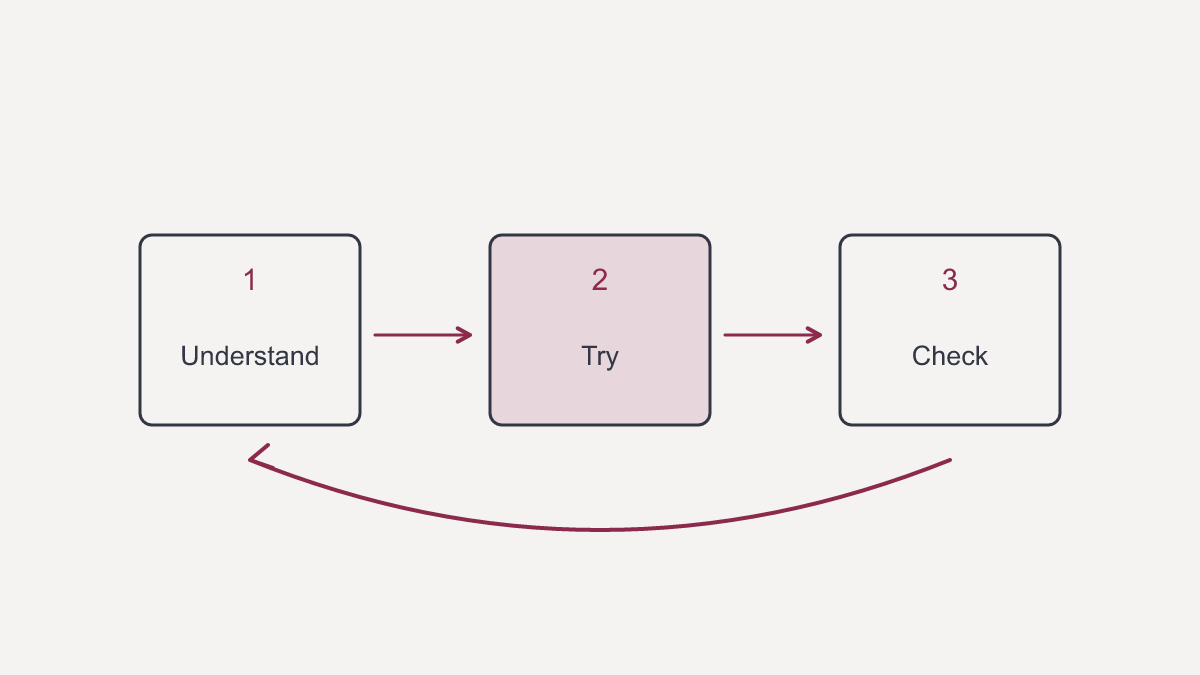
Begin with one worked example. Identify what each step accomplishes, then cover the solution and attempt a nearby problem. If you cannot start, revisit the first missing idea rather than reading the entire chapter again.
Use methods with a clear purpose
Dunlosky and colleagues reviewed common learning techniques and identified practice testing and distributed practice as particularly useful across a range of conditions. Their review also shows why no technique should be reduced to a slogan: effectiveness depends on the material and how the method is used.
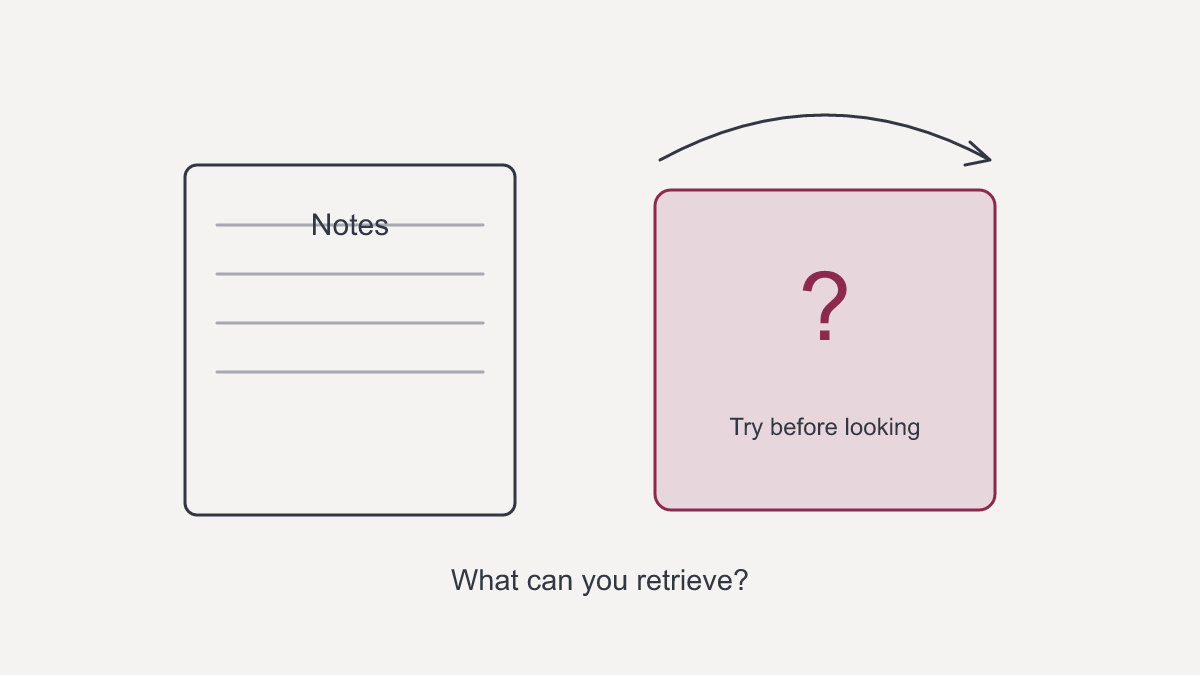
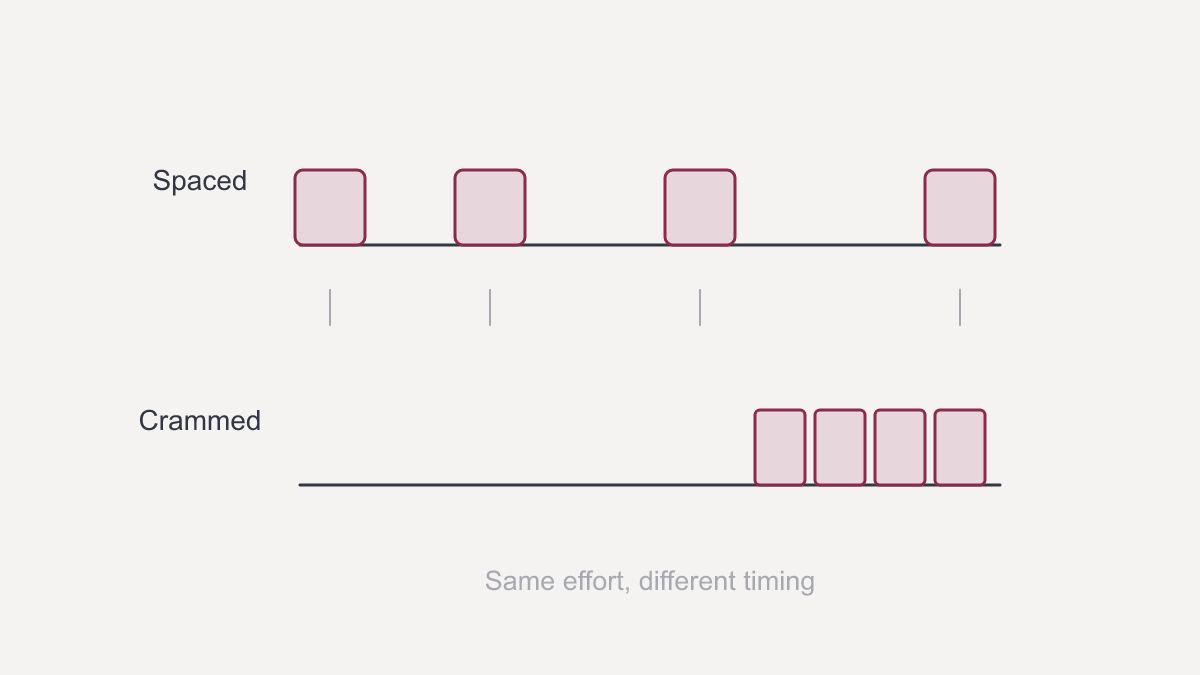
In practice, retrieving information checks access to it; spacing gives you a chance to test that access after time has passed. Feedback helps prevent repeated mistakes from becoming the practiced routine.
Sort mistakes into actionable groups
| What happened | What to try next |
|---|---|
| I did not understand the idea. | A simpler explanation or prerequisite example. |
| I understood but could not recall it. | A retrieval question and a later check. |
| I knew the steps but selected the wrong method. | Compare different problem types. |
| I rushed a correct method. | Practice a short verification step. |
This classification is a practical aid, not a diagnostic instrument. Its value is in selecting the next action.
Make progress visible
Keep a few unfamiliar problems as checkpoints. Record whether you can solve them and explain why the method works. If you only retest the exact examples you studied, recognition may look like broader understanding.
Learning efficiently is not the same as avoiding effort. A useful retrieval attempt can feel harder than rereading, even when it provides better feedback. Choose the activity that moves you toward the skill, rather than the one that makes the session feel smoothest.