Preference and effectiveness are different questions
Pashler and colleagues reviewed the evidence for learning-style matching. They explained that a convincing test would need to show different learners benefiting from different instructional methods in the predicted pattern. They found inadequate evidence to justify using these assessments as a general basis for teaching.
That does not mean everyone has identical abilities, access needs or preferences. It means that enjoying a format is not sufficient evidence that it is always the most effective format for you.
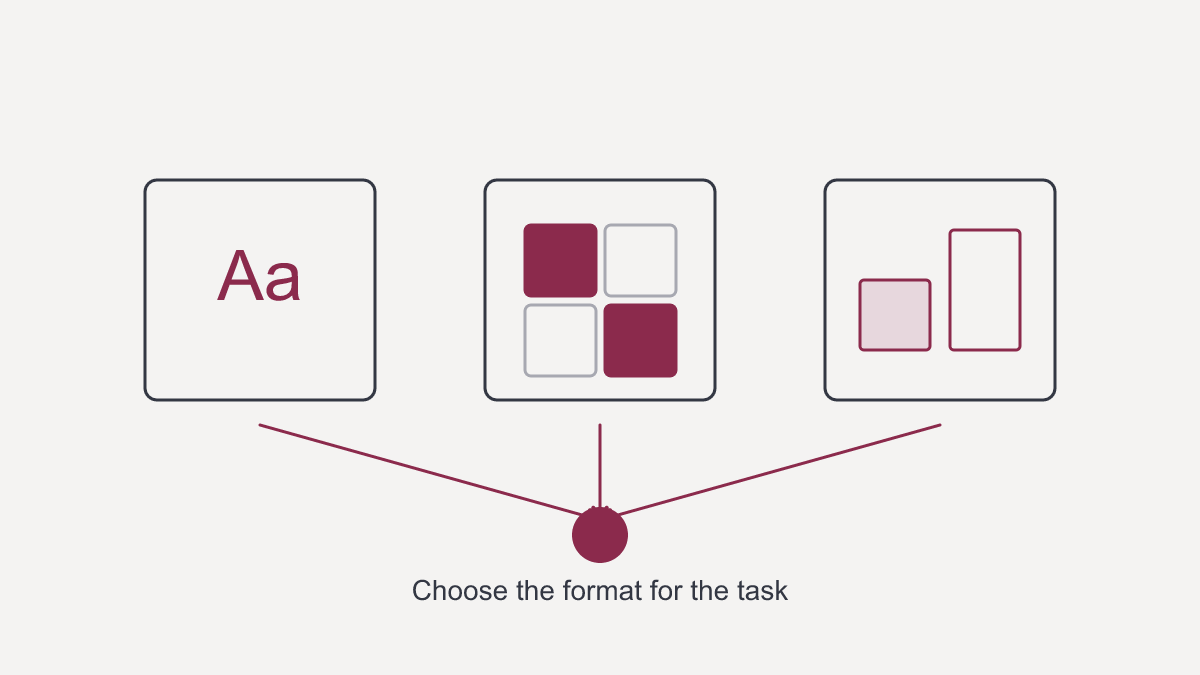
Let the subject influence the format
A map is useful for a route because the relationships are spatial. Hearing pronunciation is useful when learning a spoken word. Manipulating an object can clarify how its parts fit. These choices follow the information being learned, rather than a permanent label attached to the learner.
Many explanations benefit from combining formats: a diagram showing a cube net, a short verbal account of the folding rule and an attempt to predict which faces meet.
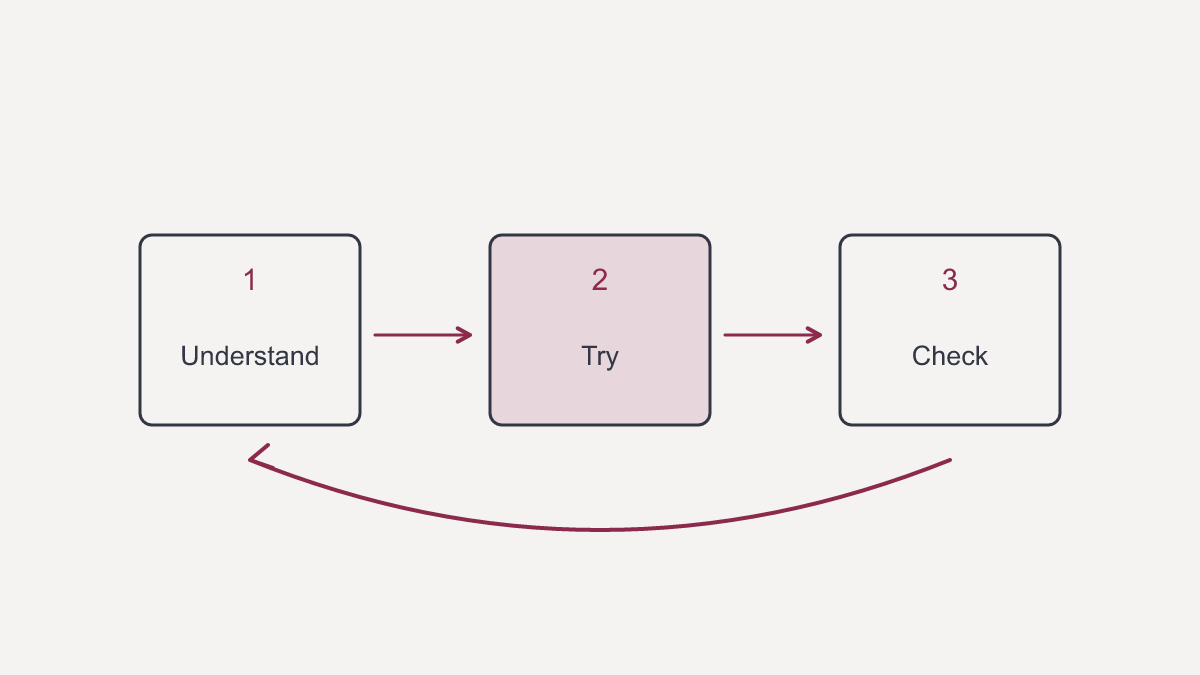
Check whether learning happened
After a lesson, try an unfamiliar example or explain the idea without the source. That outcome matters more than whether the lesson matched the label from a questionnaire.
If a format is inaccessible or confusing, adapt it. Larger text, captions, clearer diagrams or a slower explanation can remove practical barriers. Rejecting a simplistic learning-style theory is not a reason to ignore individual needs.
A better question to ask
Instead of “Am I a visual learner?”, ask “What representation makes this relationship easiest to understand, and can I apply it afterwards?” This directs attention to the problem and the evidence of learning.
For starp's spatial questions, seeing and tracking a shape matters. For a written conditional rule, precise language matters. Practicing both expands your familiarity with the demands instead of encouraging you to avoid an entire kind of reasoning because a quiz assigned you a label.