The gap is part of the learning plan
Cepeda and colleagues studied review intervals and later retention over substantial periods. The interval associated with better retention changed with the delay before the final test. That helps explain why there is no single perfect spacing schedule for every subject and deadline.
If you need a fact tomorrow, your useful review window differs from someone who needs it next year. A schedule copied from an app is a starting structure, not a universal law of memory.
An example with the same study time
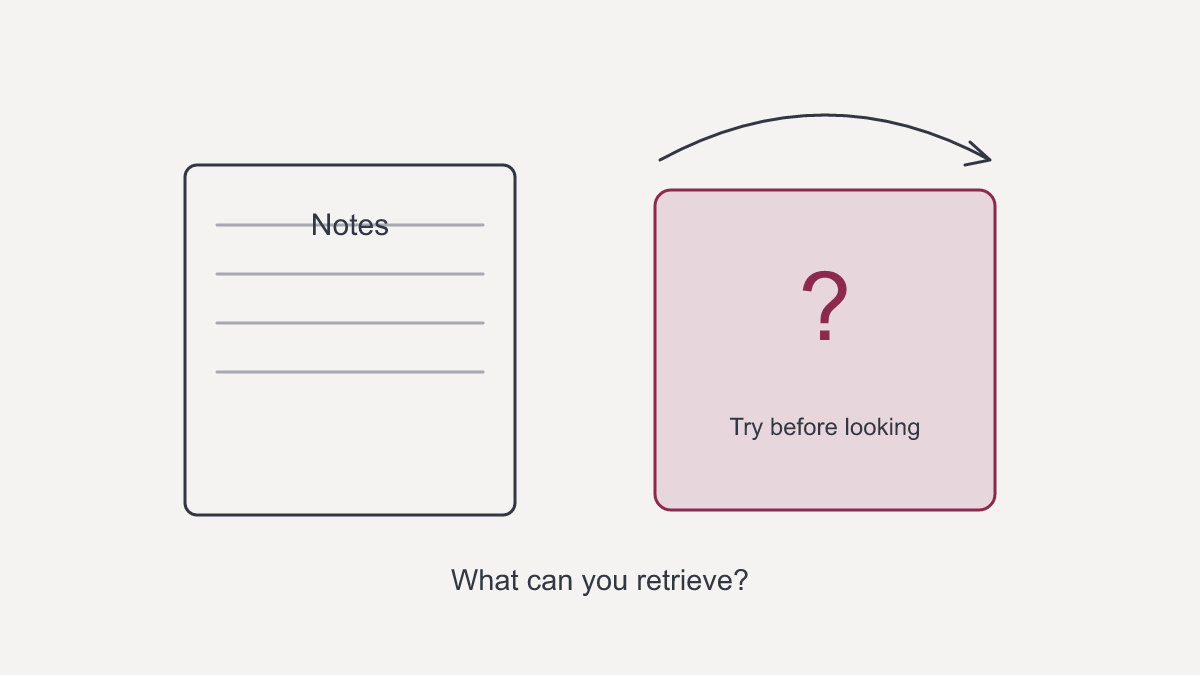
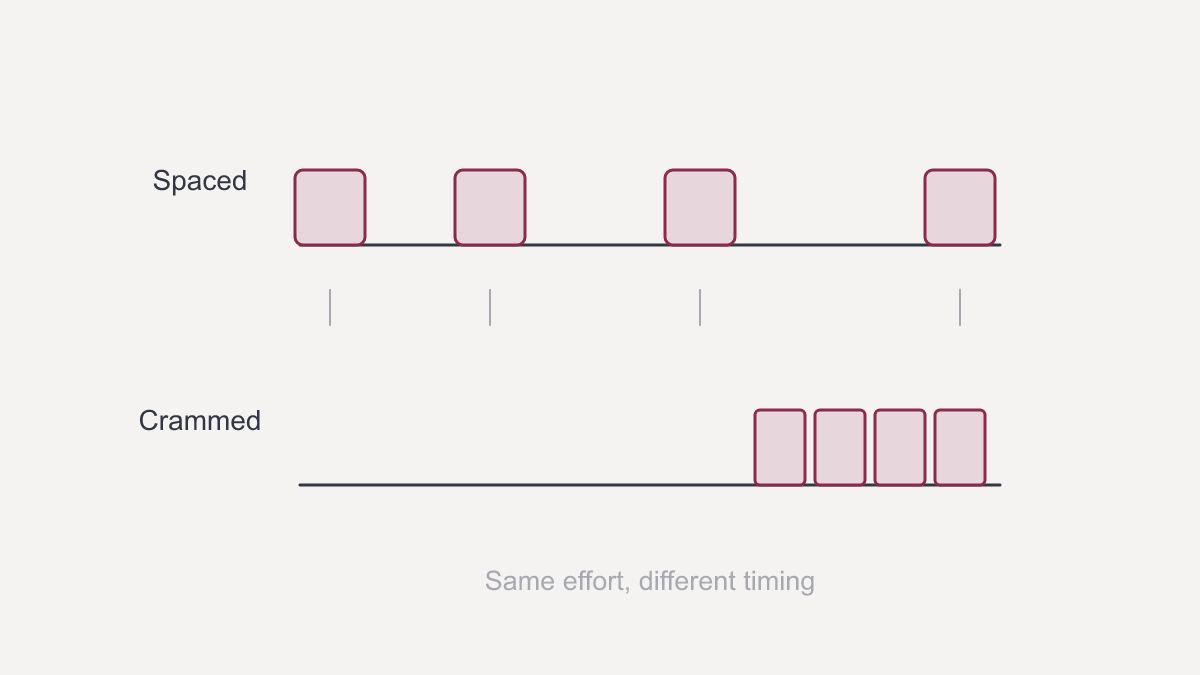
Suppose you have an hour to learn a small set of concepts. One option is a single hour on Sunday. Another is an initial session followed by shorter reviews over the following days. In the spaced version, begin each review by trying to recall the ideas before looking.
The point is not to keep adding study time until the comparison is unfair. It is to place useful checks across time and concentrate further work on what remains difficult.
What to do during a review
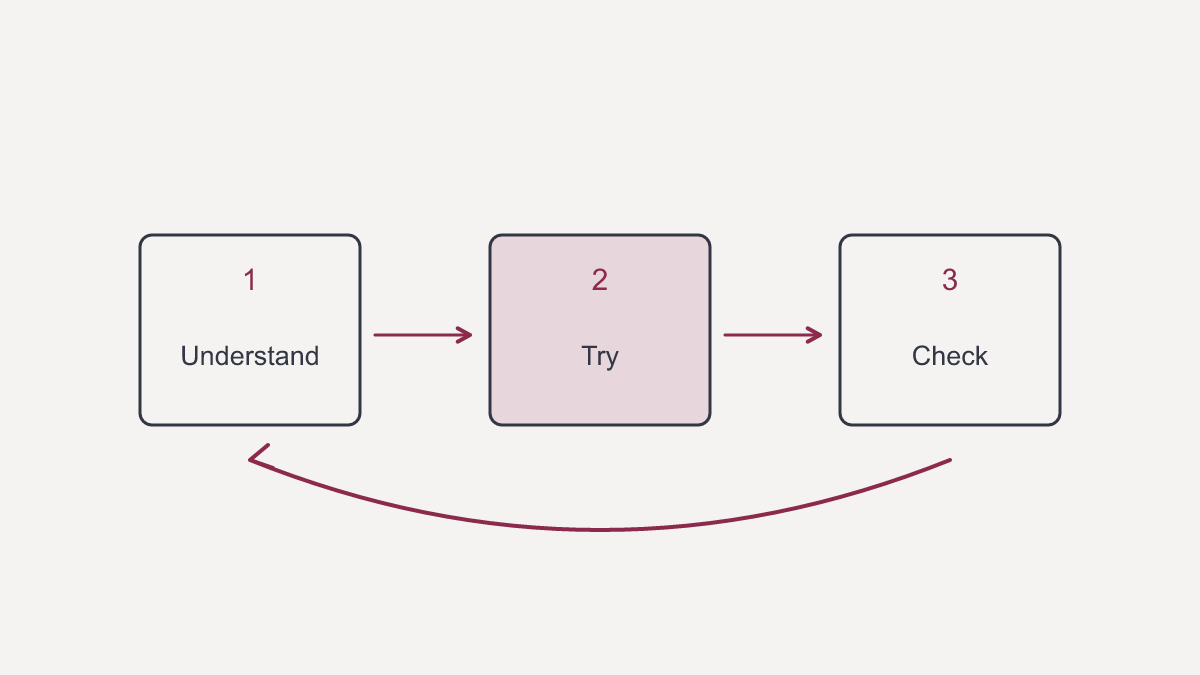
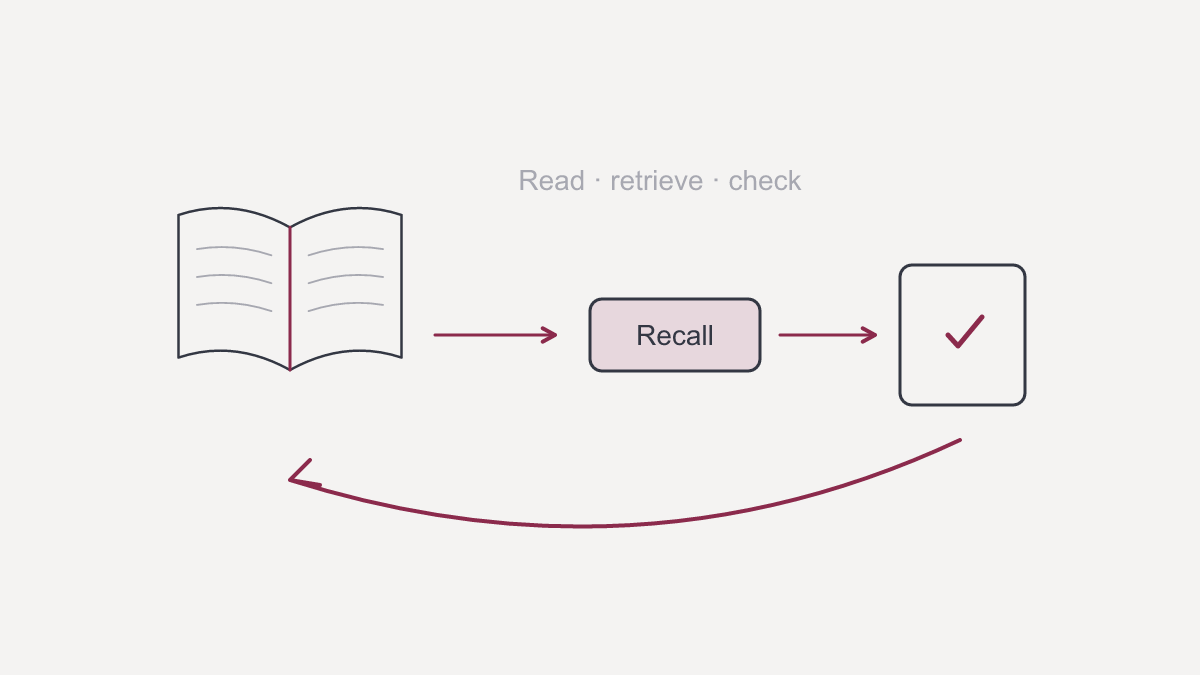
- Answer a question without the notes.
- Check and correct the answer.
- Explain one application or example.
- Decide when another check would be useful.
If an answer is immediate and secure, it may need less frequent review than one you cannot reconstruct. If you repeatedly fail, the problem may be understanding rather than scheduling.
What if the deadline is tomorrow?
Use the time available realistically. Prioritize the central ideas, check recall and take opportunities for separate review sessions where possible. Avoid spending the entire session decorating notes or repeatedly reading the easiest material.
For future learning, start earlier enough to allow forgetting and recovery to become visible. In reasoning practice, also vary the examples: spacing the same solved puzzle can improve memory for that puzzle without proving that you can solve a different one. Our practice-effects guide explains that distinction.