What students remembered after five minutes, two days and one week
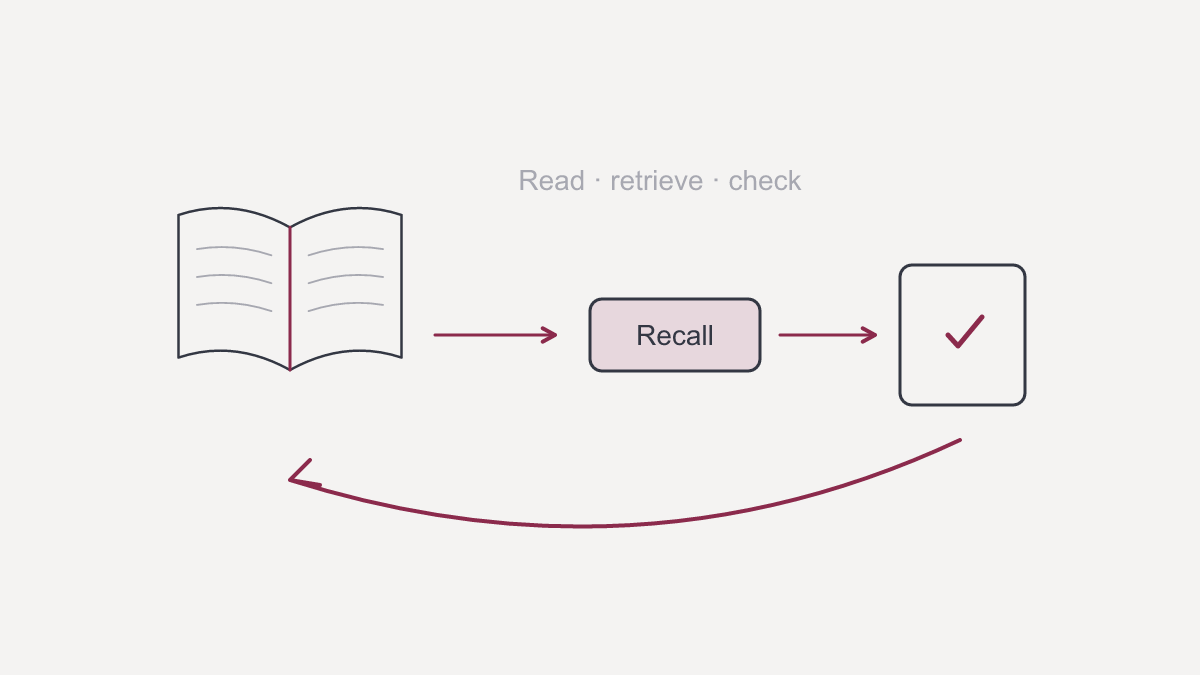
In Roediger and Karpicke’s first experiment, students read short passages. After reading, they either studied a passage again or tried to recall it without seeing it. The researchers scored how many of the passage’s ideas students could later reproduce.
| Time until final test | Studied again | Practiced recall |
|---|---|---|
| 5 minutes | 81% | 75% |
| 2 days | 54% | 68% |
| 1 week | 42% | 56% |
The 14-percentage-point advantage at one week applied to recall of these passages. The experiment measured neither exam grades nor the best study method for every subject. If you are studying for Friday, an easy reread on Monday can give a misleading impression of what you will remember.
A question beats a familiar sentence
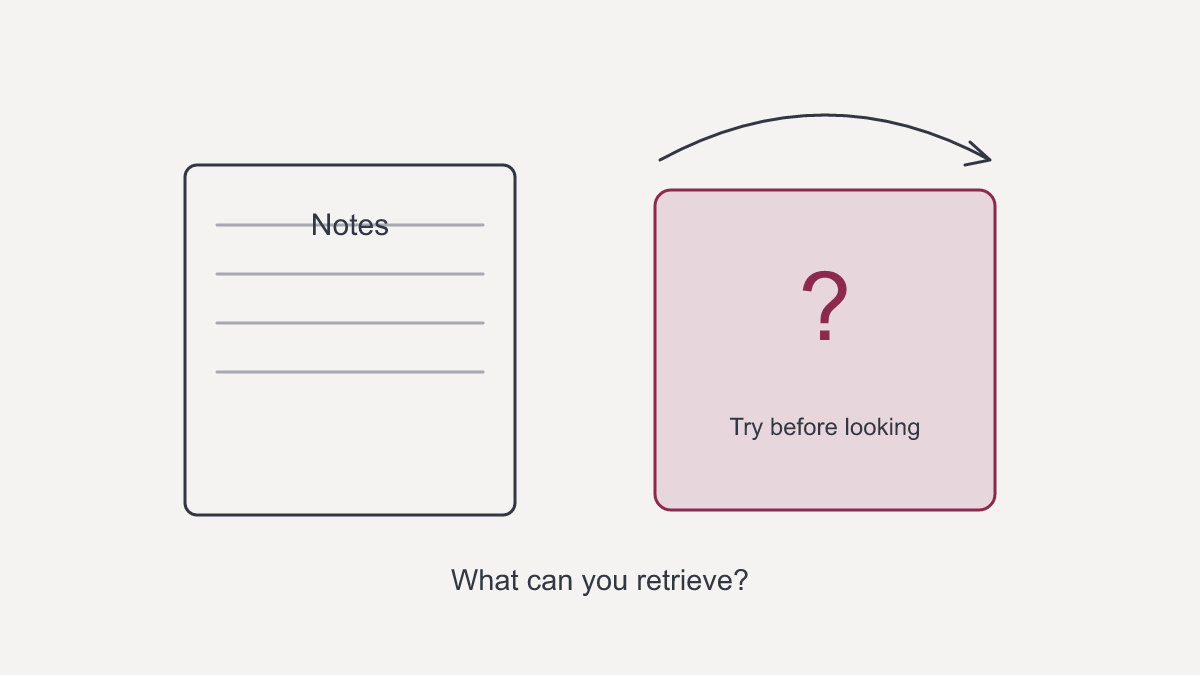
Reading “percentile is relative standing” may feel easy after several passes. Answering “How can 70% correct correspond to different percentiles on two tests?” requires you to reconstruct the concept.
That question also distinguishes remembering a definition from applying it. If your goal is solving problems, include questions that require choosing a method or explaining an example, not just reciting a term.
What research supports
McDaniel, Roediger and McDermott examined how test-enhanced learning extends to educational materials and classroom settings. Their work supports retrieval as a learning activity, rather than treating testing solely as a final measurement. It does not imply that looking at an explanation is unnecessary.
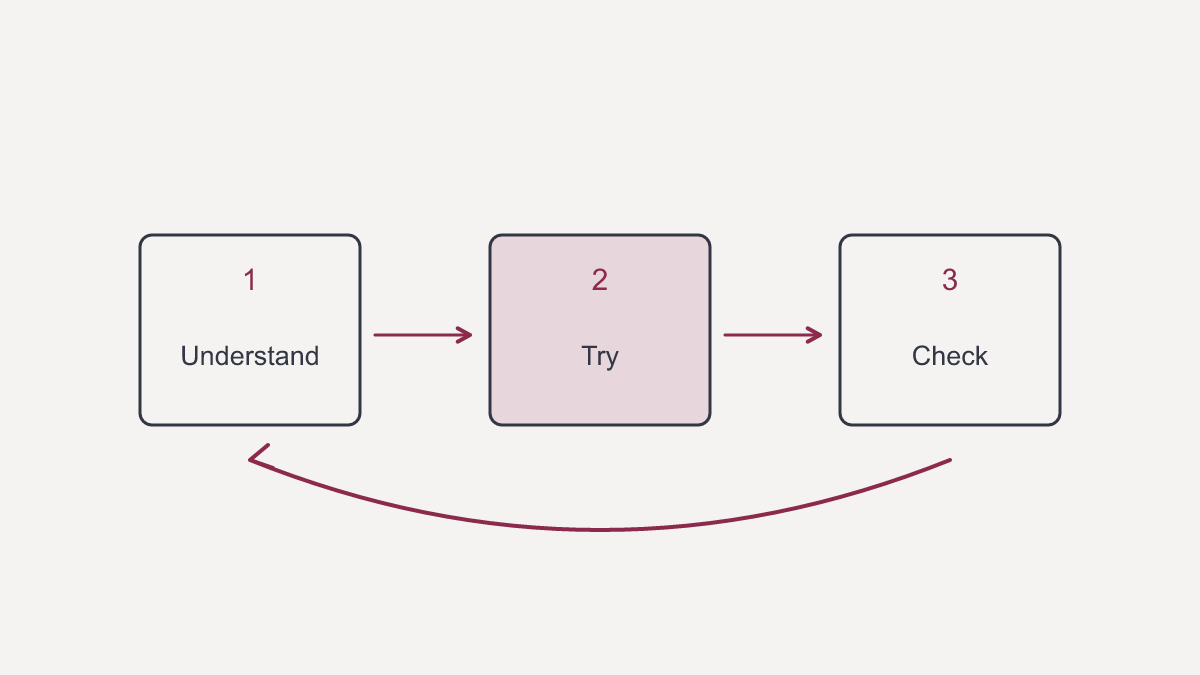
You first need something meaningful to retrieve. When a concept is new or confusing, careful reading and worked examples can supply that foundation. After an attempt, checking the answer helps identify and repair errors.
Build a useful recall card
Put one clear question on the front and a concise explanation on the back. Avoid a cue that gives away most of the answer. For a process, ask why a step is necessary as well as what the step is.
For example, “Why is 20% off followed by 20% on not a return to the original price?” tests whether you understand changing bases. A card showing the whole calculation with one number missing might test much less.
Reread selectively
If your answer is incomplete, return to the specific passage that fills the gap. Then try a fresh question. Rereading becomes more targeted when a retrieval attempt has shown you what needs attention.
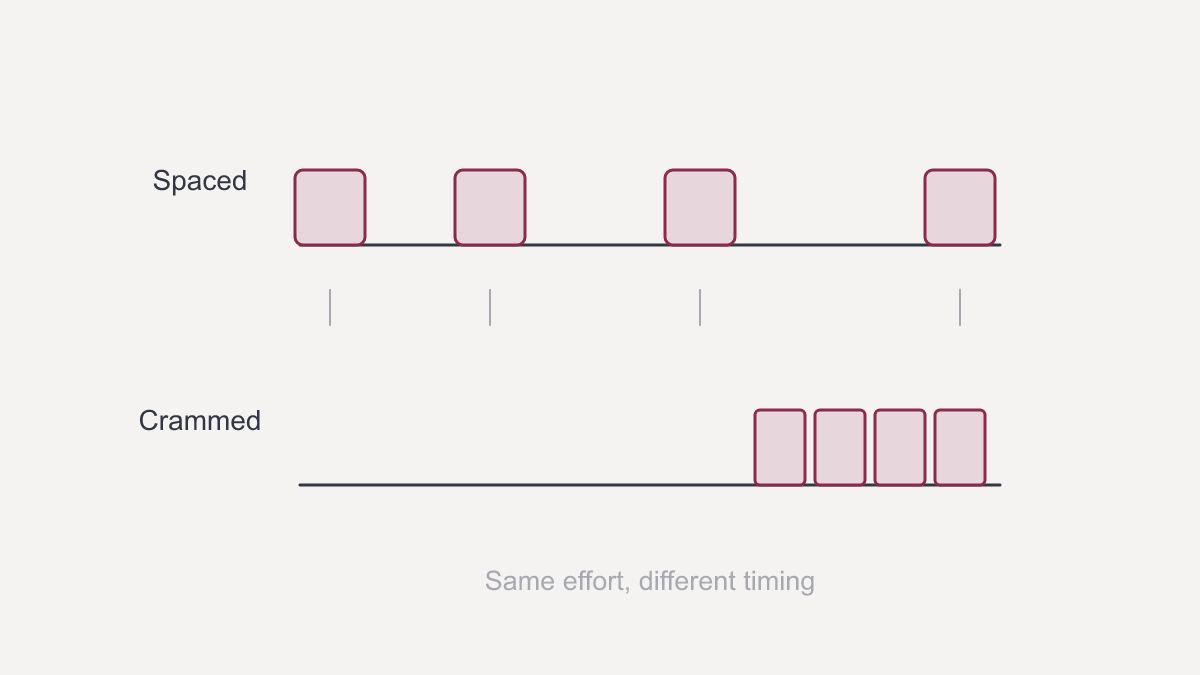
Keep some questions for a later session. Answering immediately after seeing the solution mainly shows that it is still fresh. Combining retrieval with spacing gives a clearer view of what you can use after time has passed. The goal is not to make study artificially difficult; it is to replace guesswork about learning with useful evidence.