Give the information somewhere reliable to live
Risko and Gilbert describe cognitive offloading: using actions or external resources to reduce a task's mental demands. A reminder can hold a future intention while you concentrate on something else. This is an ordinary way to organize thinking, not evidence that your mind has failed.
Suppose you are comparing three travel options. Recording the prices lets you use attention for the trade-offs instead of repeatedly remembering each amount. The note improves the work even if you cannot recite the prices tomorrow.
When you need to know it without the note
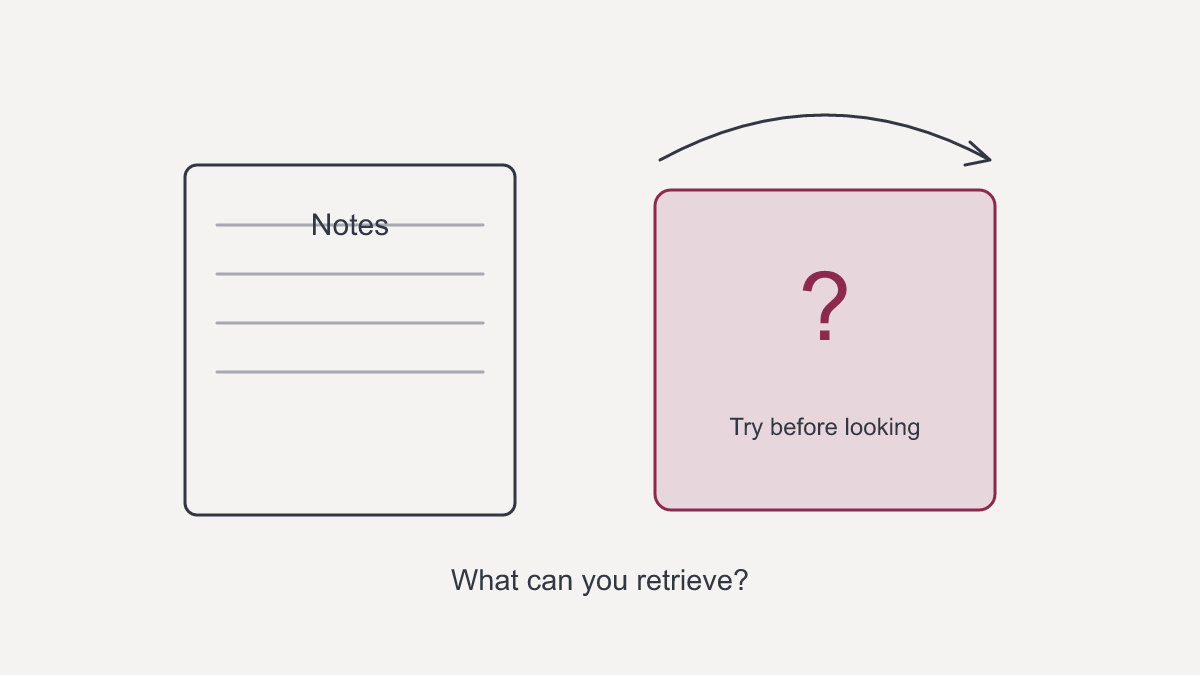
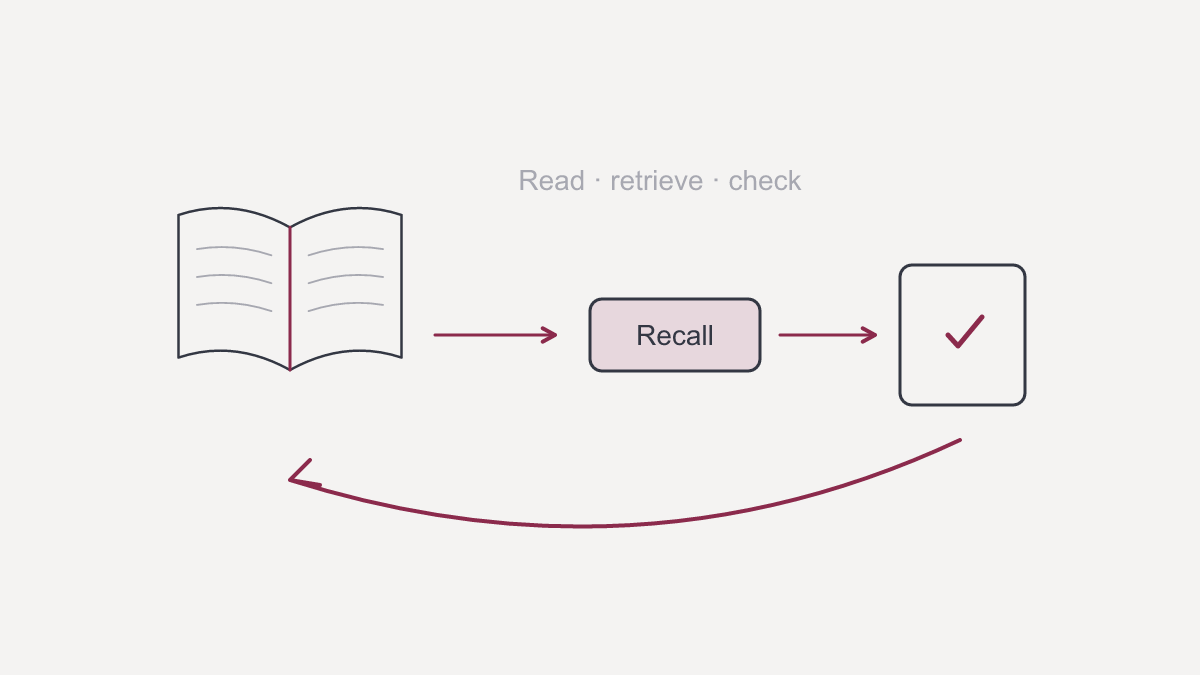
Study has a different target. If you need to explain a concept in an exam, copying it neatly is not enough evidence that you can retrieve it. Close the notes and try to answer a question about the idea. Then reopen them to correct the missing parts.
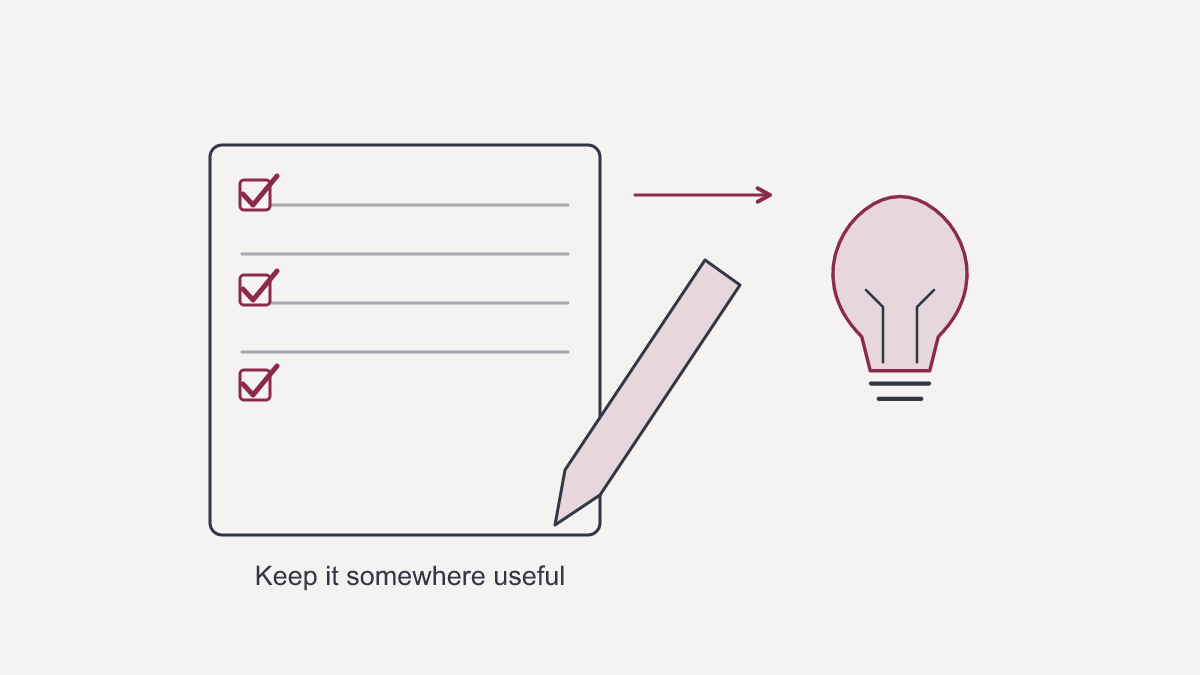
You can combine both uses: keep a concise reference sheet for accuracy, then practice using the concept without looking. The reference supports checking; the retrieval attempt shows what is accessible in memory.
Make a note that has a job
| Goal | A useful note |
|---|---|
| Remember a commitment | An action with a date and a reminder. |
| Resume interrupted work | The next step and the unresolved question. |
| Learn a concept | A question, your explanation and a worked example. |
| Compare options | The same criteria recorded for each option. |
A large collection of unorganized notes can be hard to use. Decide where each type belongs and how you will find it again.
Notes and cognitive tests
Follow an assessment's instructions about outside aids. A task designed to measure unaided memory changes if you record the material. In everyday work, however, using a note may be exactly the sensible choice.
The distinction is purpose: measuring a capacity under specified conditions and completing a real-world task efficiently are different goals. Neither requires treating every useful tool as a shortcut you should feel guilty about.