The decision threshold changes
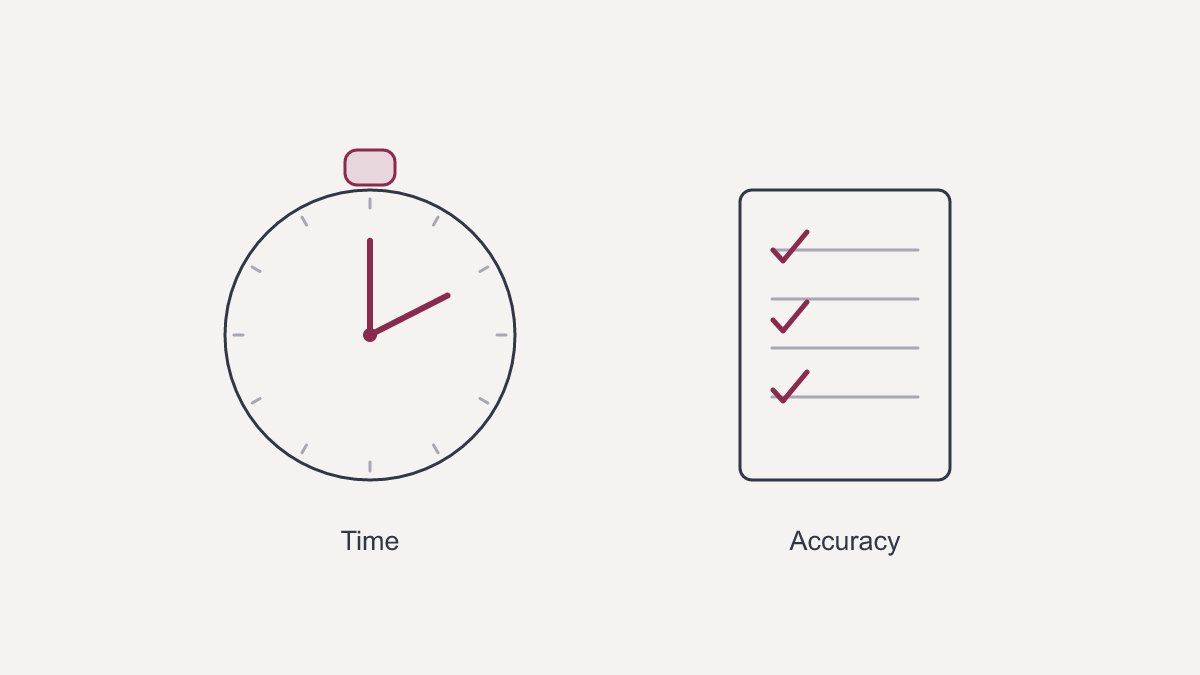
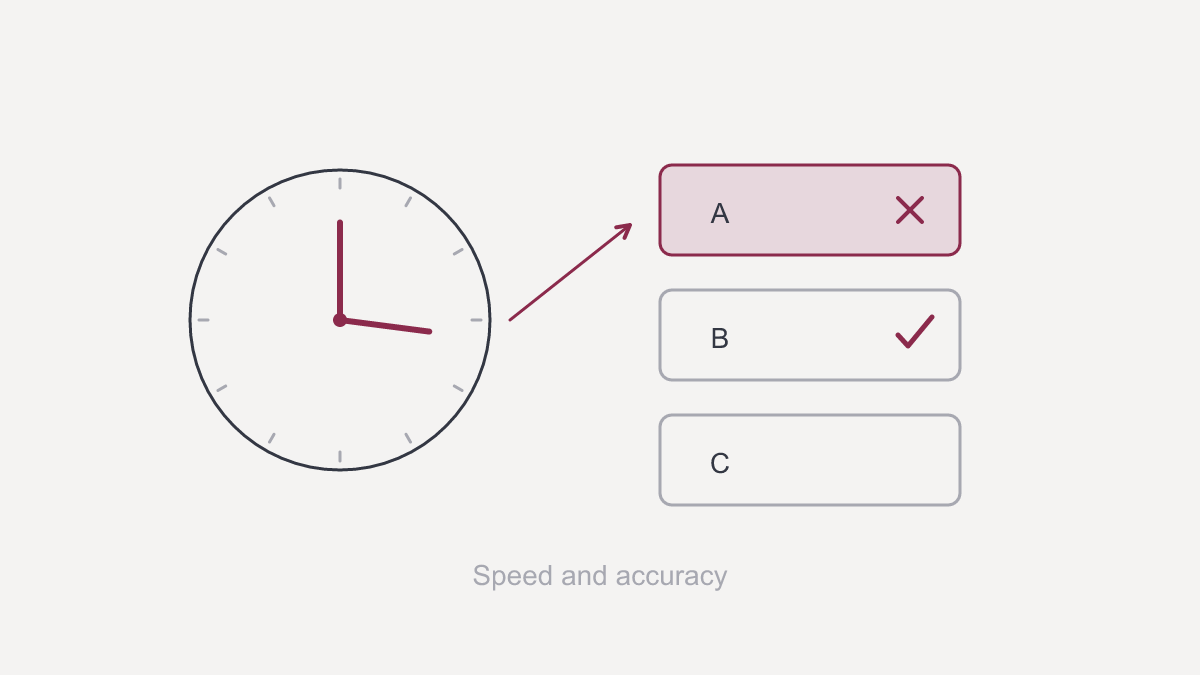
Research on the speed–accuracy trade-off examines how people balance fast responses against careful decisions. Emphasizing speed often leads to quicker, less accurate choices; emphasizing accuracy can lead to slower ones. The size of the trade-off varies by task and situation.
In a matrix puzzle, you might notice that a shape rotates and immediately select a rotated answer. A second feature, such as the number of dots, may rule that answer out. You found part of the rule but stopped checking too soon.
Three errors worth separating
- Reading error: you answered what could be true when the question asked what must be true.
- Tracking error: you lost a step in a calculation or alternating sequence.
- Stopping error: you accepted the first plausible rule without checking the remaining clues.
These categories suggest different fixes. Reading the final sentence again addresses the first; writing a clearer mental sequence addresses the second; a final consistency check addresses the third. Simply telling yourself to “be smarter” offers no comparable action.
Pace by progress, not constant clock checking
Choose occasional checkpoints instead of watching the timer after every thought. If you have spent a long time without eliminating an option or learning anything new, another pass through the same idea may have low value.
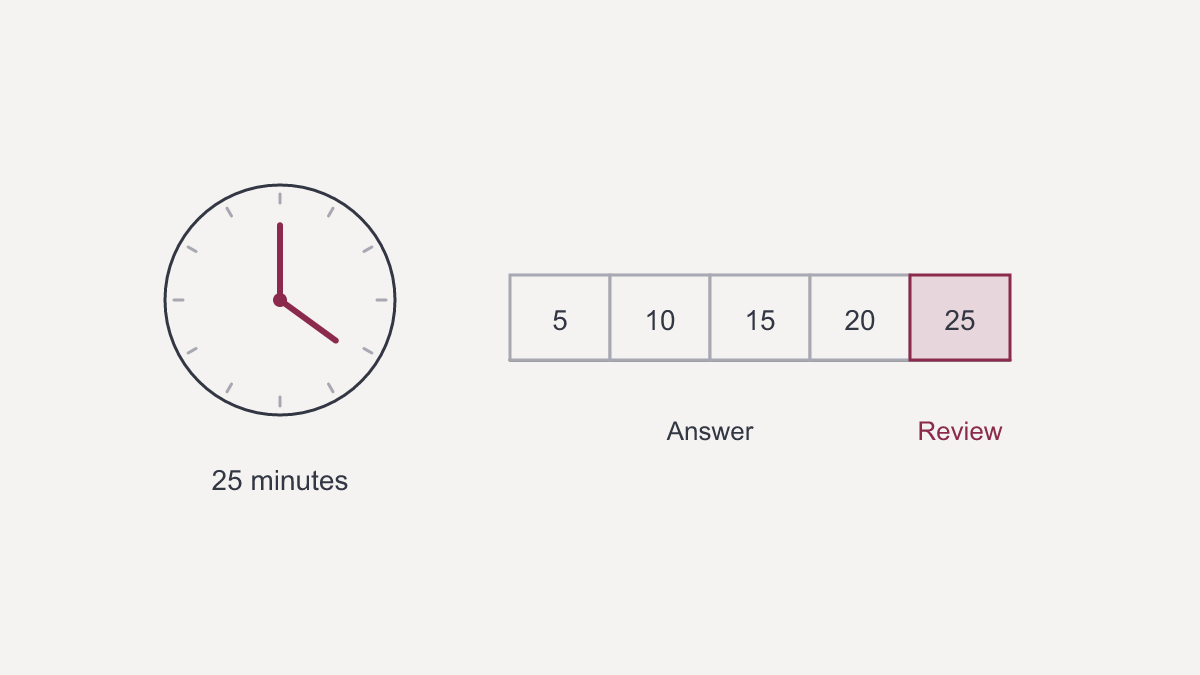
The right strategy depends on the assessment's navigation and scoring rules. On starp, correct answers determine the score and the deadline is 25 minutes for all 30 questions. There is no separate reward for an early finish.
What an untimed retry can show
Reworking an unfamiliar example without a deadline can help identify whether timing was part of the difficulty. Reworking a question after seeing its solution mainly shows that you can follow an explanation. Those are different observations.
Use practice to establish a repeatable process: understand the task, generate a candidate rule, check it, then answer. The time-management guide turns that process into a practical test routine.