The scale and the test are different things
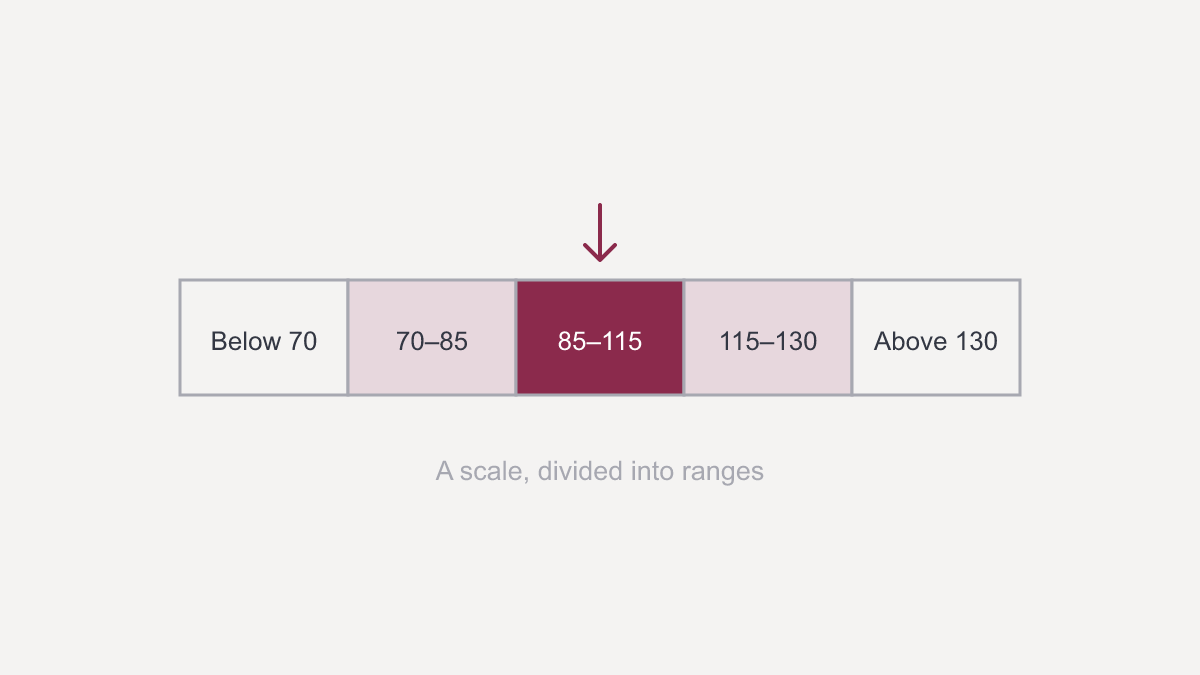
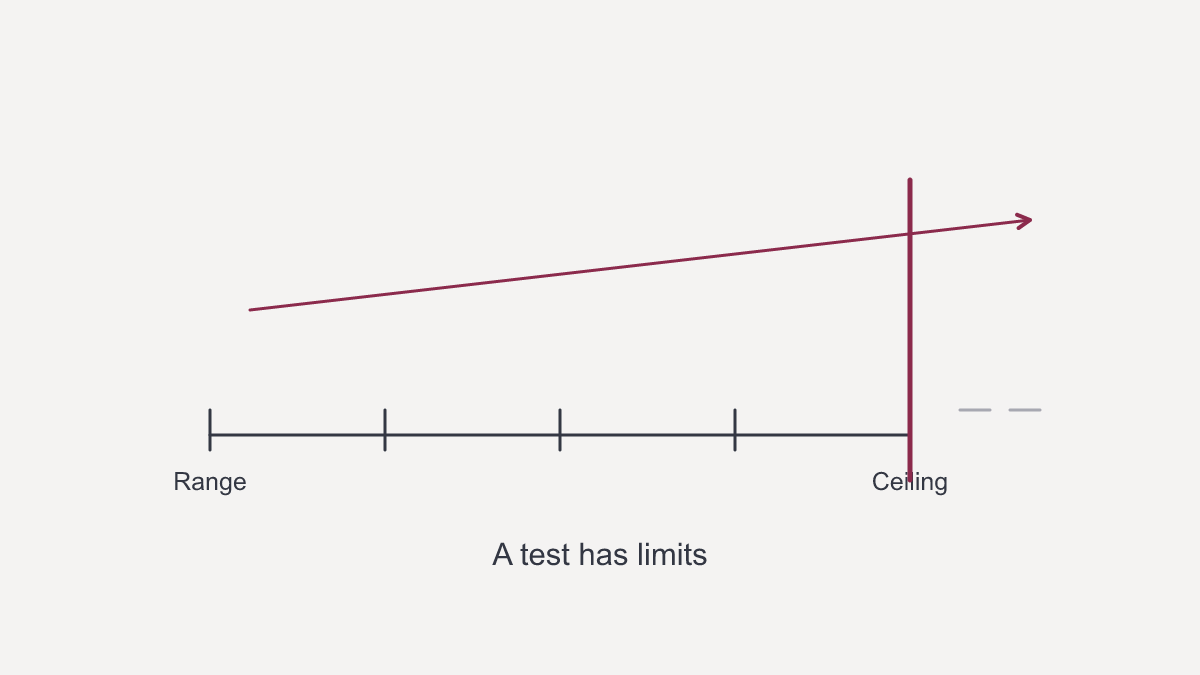
A mathematical normal distribution extends indefinitely in both directions. A real test has a finite number of items and a limited reference sample. Its ability to distinguish very high performances therefore has practical limits.
Answering every item correctly shows that the test ceiling has been reached. It does not tell you precisely how far beyond that ceiling the person might perform on harder tasks.
Standard deviation changes the number
On a scale with mean 100 and standard deviation 15, a score of 145 is three standard deviations above the mean. On a scale using standard deviation 24, the corresponding mathematical position is 172. Comparing 145 and 172 without the scale would be misleading.
The percentile calculator lets you explore that arithmetic. It is a reference calculation, not evidence that two different assessments measure people identically.
Why extreme percentiles deserve care
Very rare positions require strong evidence at the tail of a distribution. A calculator can output many decimal places even when a test lacks the reference data needed to justify that precision.
Check whether a claim comes from a conventional assessment, an extended scoring method or a specialized high-range puzzle test. These may use different procedures and should not be placed in one ranking without examining their comparability.
What to take from a high score
A high score is most useful alongside the assessment’s methods and your performance on individual tasks. starp’s report includes a four-skill profile and answer explanations so you can examine the reasoning behind the total. A perfect result does not, by itself, identify a precise population rank.
If you need formal documentation of exceptionally high performance, use an assessment accepted for that purpose. For personal curiosity, the useful result includes what you solved and how—not a contest to find the website that prints the largest number.